

Turning plans for transit into action on I-20
Years worth of transit studies for this east–west corridor have yet to bring relief to its under-served communities. A new analysis of those ideas, spearheaded by guest author Zachary Starbuck, aims to help turn them into projects that get built.
Metro Atlanta does not lack big transit ideas. Over the past few decades, the region has repeatedly studied new rail lines, bus rapid transit corridors, and highway-based transit concepts, especially along the I‑20 corridor; but too many promising projects have stalled before shovels hit the ground.
Meanwhile, the region continues to grow, car congestion intensifies, and communities along I‑20 are still waiting for reliable, high-capacity transit.
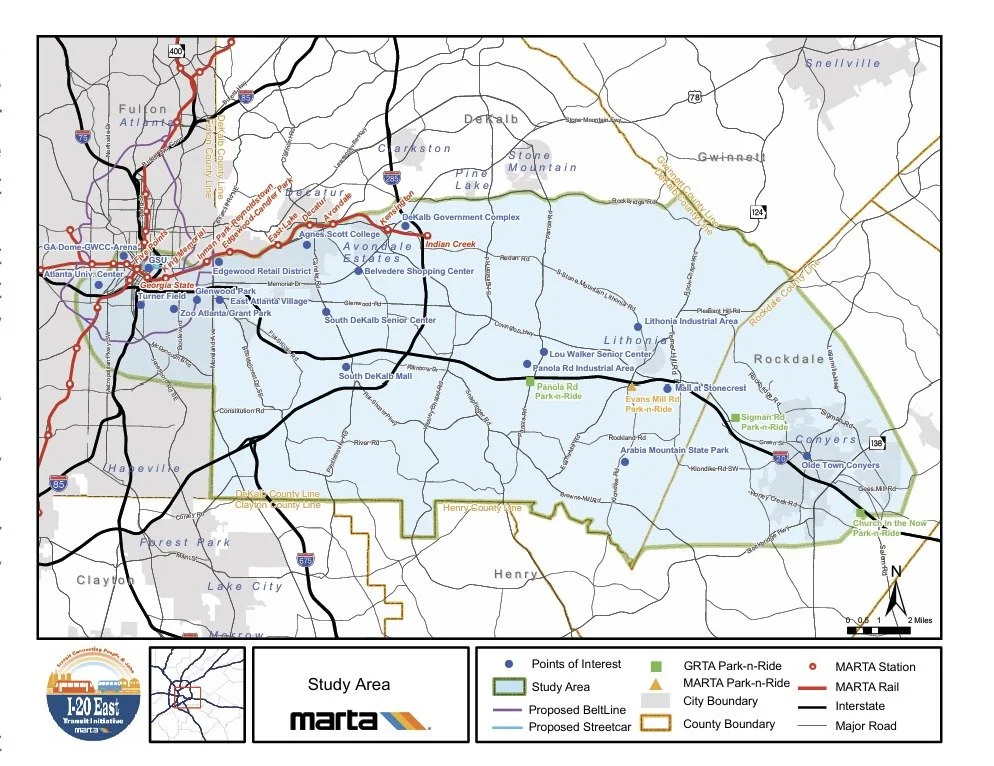
I-20 East study area for transit expansion
What makes this even more frustrating is that Metro Atlanta has the talent and capital to deliver major projects. We have skilled planners and engineers, strong universities, experienced consultants, and a network of advocates who care deeply about public transportation. The core challenge is not a lack of ability; it’s how we execute strategy, consensus building, coordination, and communication across agencies and jurisdictions.
Naming the real challenge
The same patterns present themselves year after year. Studies are launched, but their findings often sit on a shelf. Leadership changes, priorities shift, and promising recommendations are quietly deprioritized. Agencies work hard within their own mandates, but regional coordination can lag. Community engagement may be extensive for one corridor, yet the lessons from that engagement rarely carry over to the next.
In other words, Metro Atlanta’s struggle is less about vision and more about stitching together implementation: aligning strategies, building durable consensus, coordinating across institutions, and clearly communicating tradeoffs over time. My I‑20 Transit Meta-Analysis project is a pragmatic attempt to help with exactly that.
What a meta-analysis is—and why it matters here
In plain language, a meta-analysis is a structured way of looking at many related studies together instead of treating each one as a standalone document. Rather than asking, “What does this single report say?”, a meta-analysis asks:
What ideas and recommendations keep showing up across multiple projects?
Where do cost, right-of-way, and political constraints repeatedly derail good concepts?
How have equity, access, and user experience been handled differently across corridors?
By comparing past projects, corridors, and studies side by side, we can begin to see consistent themes and recurring obstacles. That bigger-picture perspective is essential if Metro Atlanta wants to stop reinventing the wheel every time it considers a new transit investment.
Why I‑20, and why now
The current phase of this project focuses on the I‑20 corridor, a long-standing priority for MARTA and the subject of ongoing work by a consultant team. I‑20 is a natural place to pilot this approach: it’s a critical east–west spine, it has been studied multiple times, and it connects communities that have been under-served by high-capacity transit.
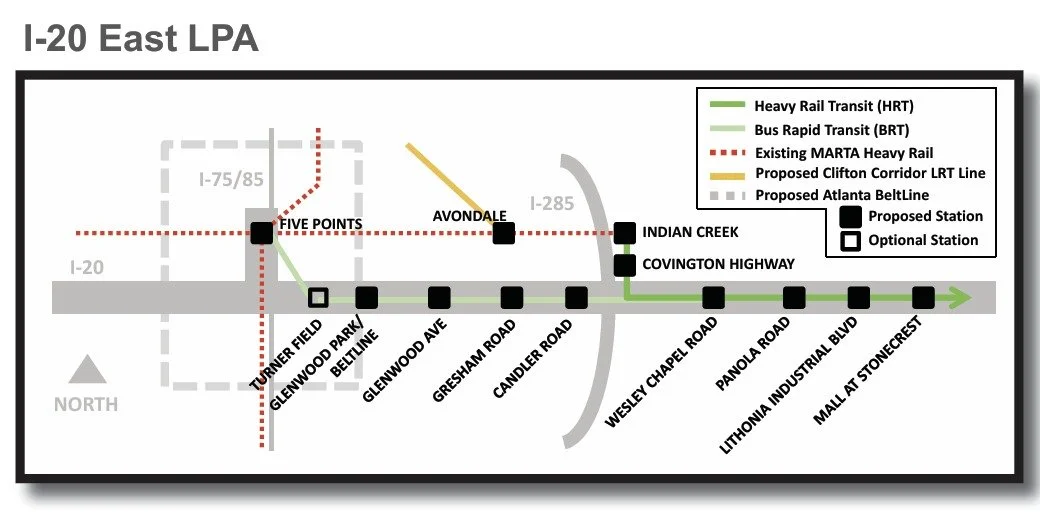
Proposed stations for a MARTA rail expansion east into DeKalb County
By organizing and synthesizing those I‑20 studies, along with comparable highway-based transit corridors elsewhere, the meta-analysis aims to provide MARTA, GDOT, the City of Atlanta, and regional planners with a clearer picture of what we already know, what keeps getting in the way, and which strategies have the best chance of moving from paper to reality.
How the project works and who participates
This project is intentionally low-cost and collaborative. Volunteers select a study or corridor, use a concise prompt to guide their review, and focus on elements such as design, right-of-way, access, user experience, and equity. Their submissions are qualitative inputs: structured reflections that help highlight patterns, contradictions, and blind spots in the existing planning record.
So far, 30 reviews have been completed (as of the time of this , with more expected in the coming weeks. Volunteers include students, early-career professionals, community advocates, and others who are simply passionate about public transportation. For them, this is both a learning opportunity and a way to meaningfully contribute to a real planning conversation.
Building MARTA’s internal capacity and civic capacity
One of the most important aspects of this project is how it supports both institutional and civic capacity. For MARTA, the meta-analysis can serve as a resource that consolidates lessons from multiple I‑20 and highway-based studies into a format that staff can use when scoping alternatives, coordinating with GDOT, or engaging the public. It helps internal teams quickly see what has been tried, what has been recommended, and where key sticking points have been in the past.
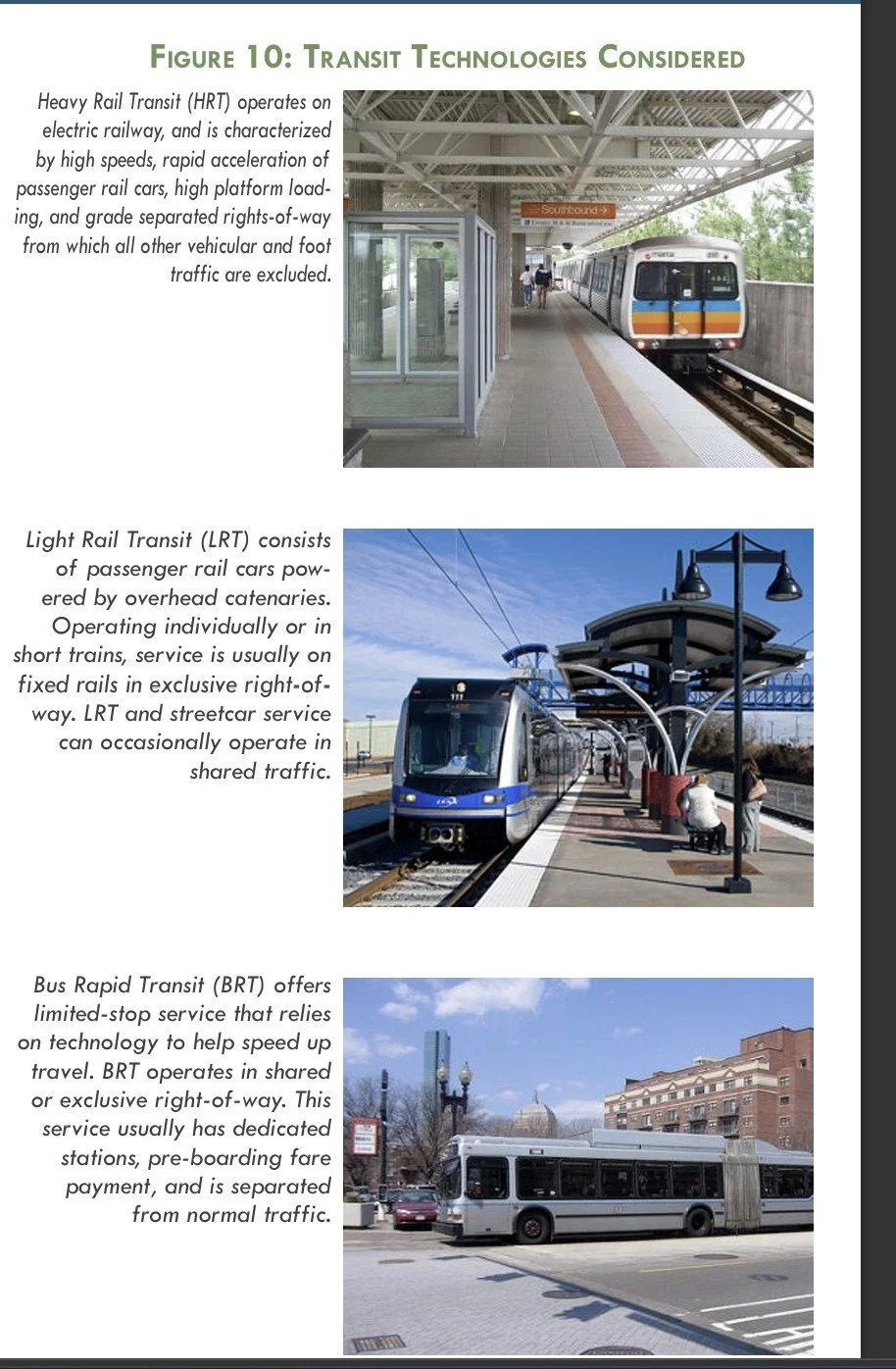
Comparisons of different options for a rapid transit route on the I-20 corridor
At the same time, the project creates an entry point for people who care about transit but aren’t yet inside the formal planning process. By inviting volunteers to read studies, reflect on them, and share structured feedback, the project connects passionate individuals to the technical and policy work that shapes their communities. In that sense, it is both a research effort and a pipeline for cultivating informed, engaged transit supporters.
Where this can lead
The long-term goal is to secure buy-in from MARTA, GDOT, the City of Atlanta, and other regional partners so that the findings are not just interesting but useful. If the I‑20 meta-analysis proves its value, the same method could be applied to other MARTA expansion corridors and to GDOT’s emerging passenger rail initiatives. Over time, this could become a repeatable tool: a way for Metro Atlanta to systematically learn from its own planning history before launching each new round of studies.
A pragmatic call to action
This project does not promise a single grand solution to Metro Atlanta’s transit challenges. Instead, it offers a pragmatic approach:
Identify proven strategies and recurring pitfalls across past I‑20 and highway-based studies.
Use that knowledge to inform current and future decisions, so we are not constantly going back to the drawing board.
If you are interested in contributing a study review, sharing past reports, or helping connect this work with MARTA, GDOT, the City of Atlanta, or other partners, you are invited to get involved. The more perspectives we bring to this meta-analysis, the better equipped Metro Atlanta will be to turn long-discussed transit ideas into projects that get built.
You can send me an email at zstarbuckcsc@gmail.com or get in touch with me on LinkedIn at Zachary Starbuck | LinkedIn